

“Vos” inquit “uideritis quid illi debeatur: ego me etsi peccato absoluo, supplicio non libero; nec ulla deinde impudica Lucretiae exemplo uiuet.” Cultrum, quem sub ueste abditum habebat, eum in corde defigit, prolapsaque in volnus moribunda cecidit. Conclamat vir paterque.»
Tito Livio – Ab Urbe Condita, Libro 1-58
“It is for you,” she said, “to see that he gets his deserts; although I acquit myself of the sin, I do not free myself from the penalty; no unchaste woman shall henceforth live and plead Lucretia’s example.” She had a knife concealed in her dress which she plunged into her heart, and fell dying on the floor. Her father and husband raised the death-cry.
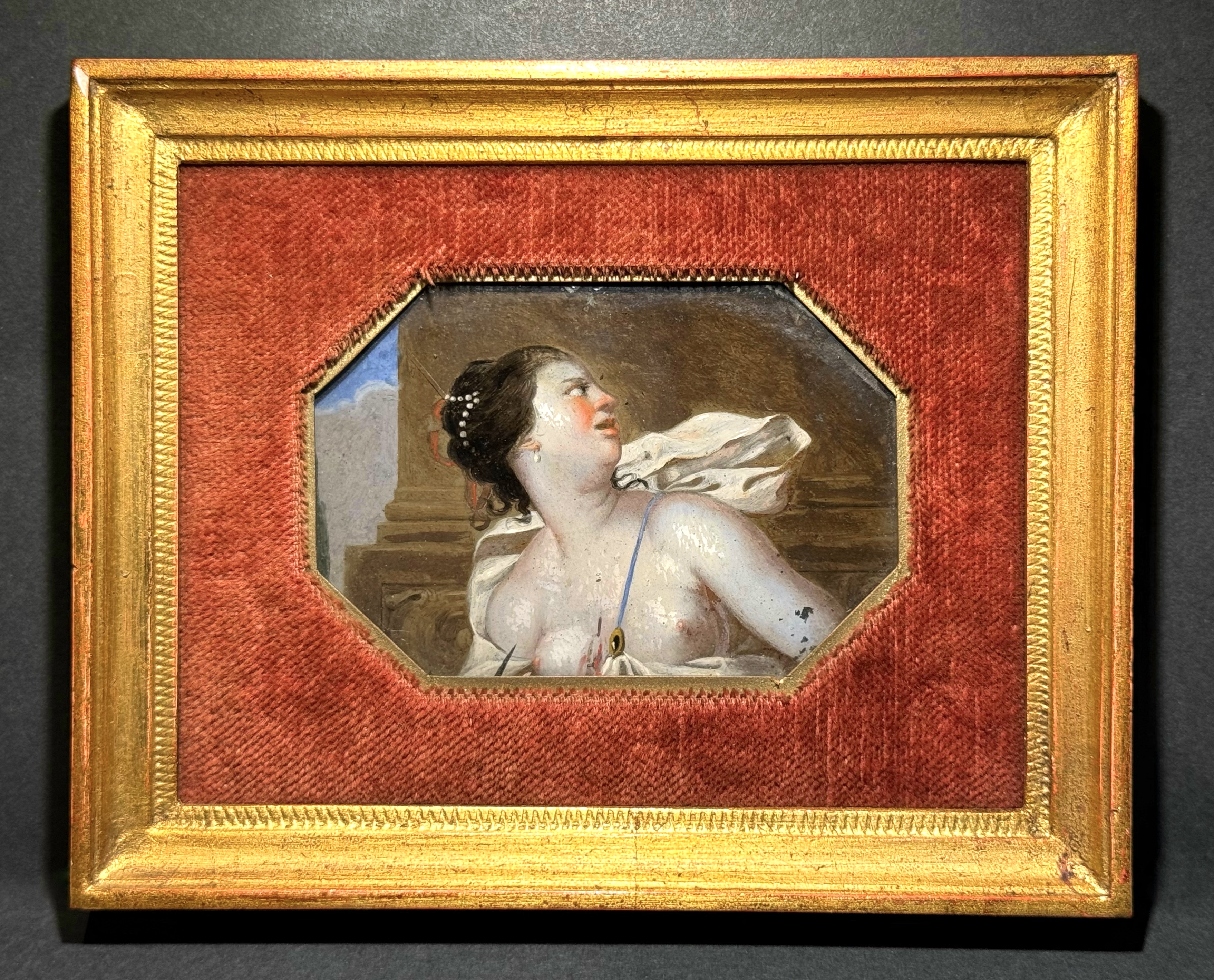
Looking at the small reverse glass painting, it almost seems as if you can hear the woman portrayed uttering the words written by the pen of Titus Livius with a final cry of pain. The legend of Lucretia Romana is well known to those who have had the opportunity to approach the history of ancient Rome, and the myth of her figure over time has become the symbol of battles that are still extremely topical today (unfortunately).
Lucretia was a Roman woman who reflected in every way the feminine ideal of her time: she was modest, devoted to the home and loyal to her husband Tarquinius Collatinus.
It was precisely Lucretia’s decency and beauty that attracted the attention of Sextus Tarquinius, son of Tarquinius Superbus, the last king of Rome. Taking advantage of Collatinus’ absence, the man went under a pretext to the woman’s house, who, unaware of his real intentions, welcomed him into her home. The man left her no escape, threatening her with weapons and raping her, leaving the woman wounded and desperate.
Lucretia immediately told her father Brutus and her husband what had happened, and succumbing to the shame and dishonor, she stabbed herself in the chest with a dagger hidden in her clothes, taking her own life.
Her husband Collatinus, her father and his great friend Lucius Junius Brutus decided to avenge her, provoking and leading a popular uprising, which drove the Tarquins from Rome and forced them to take refuge in Etruria.
Thus was born the Roman res publica, whose first two consuls were Lucius Tarquinius Collatinus and Lucius Junius Brutus, architects of the uprising against the last king of Rome.
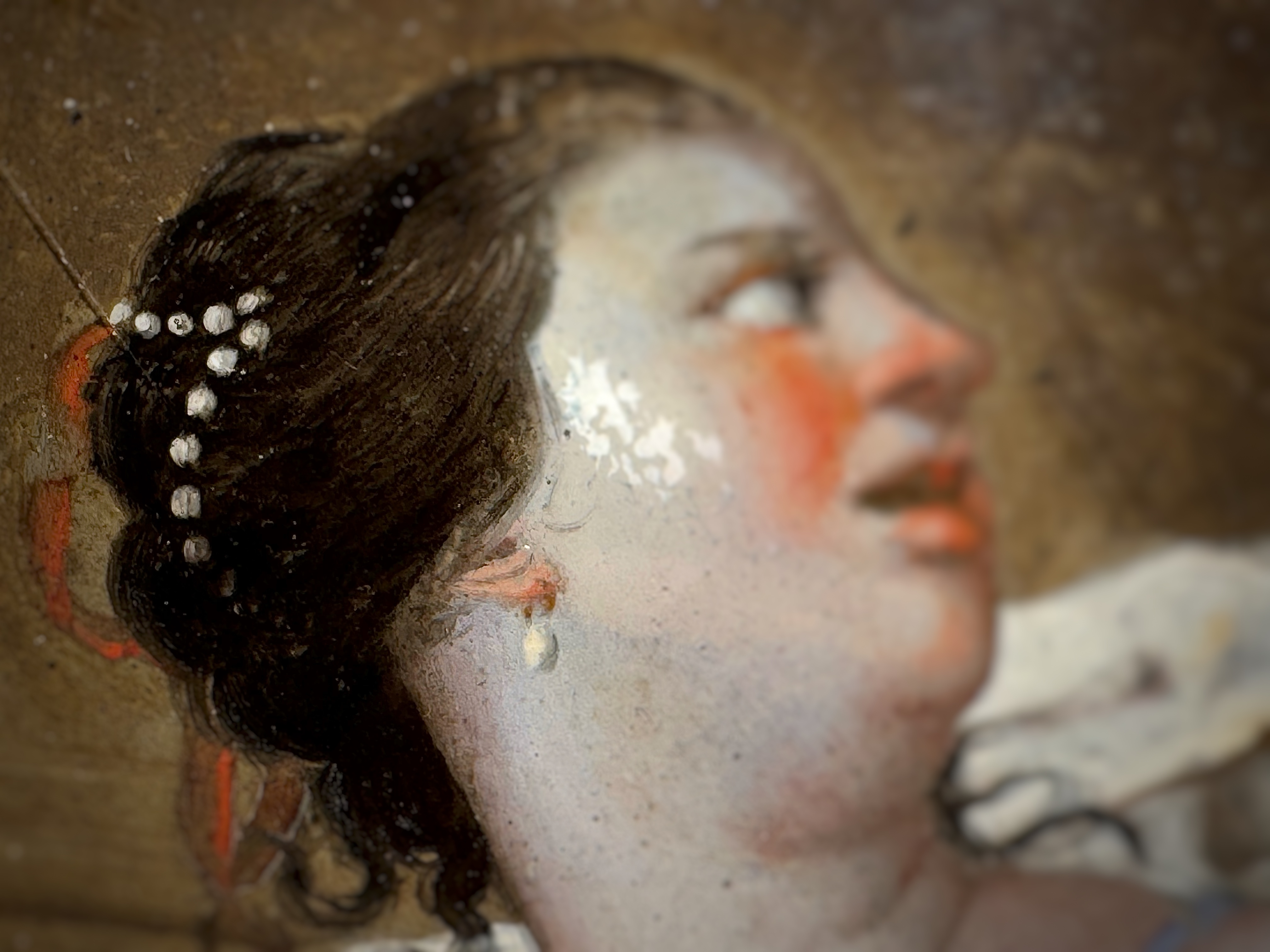
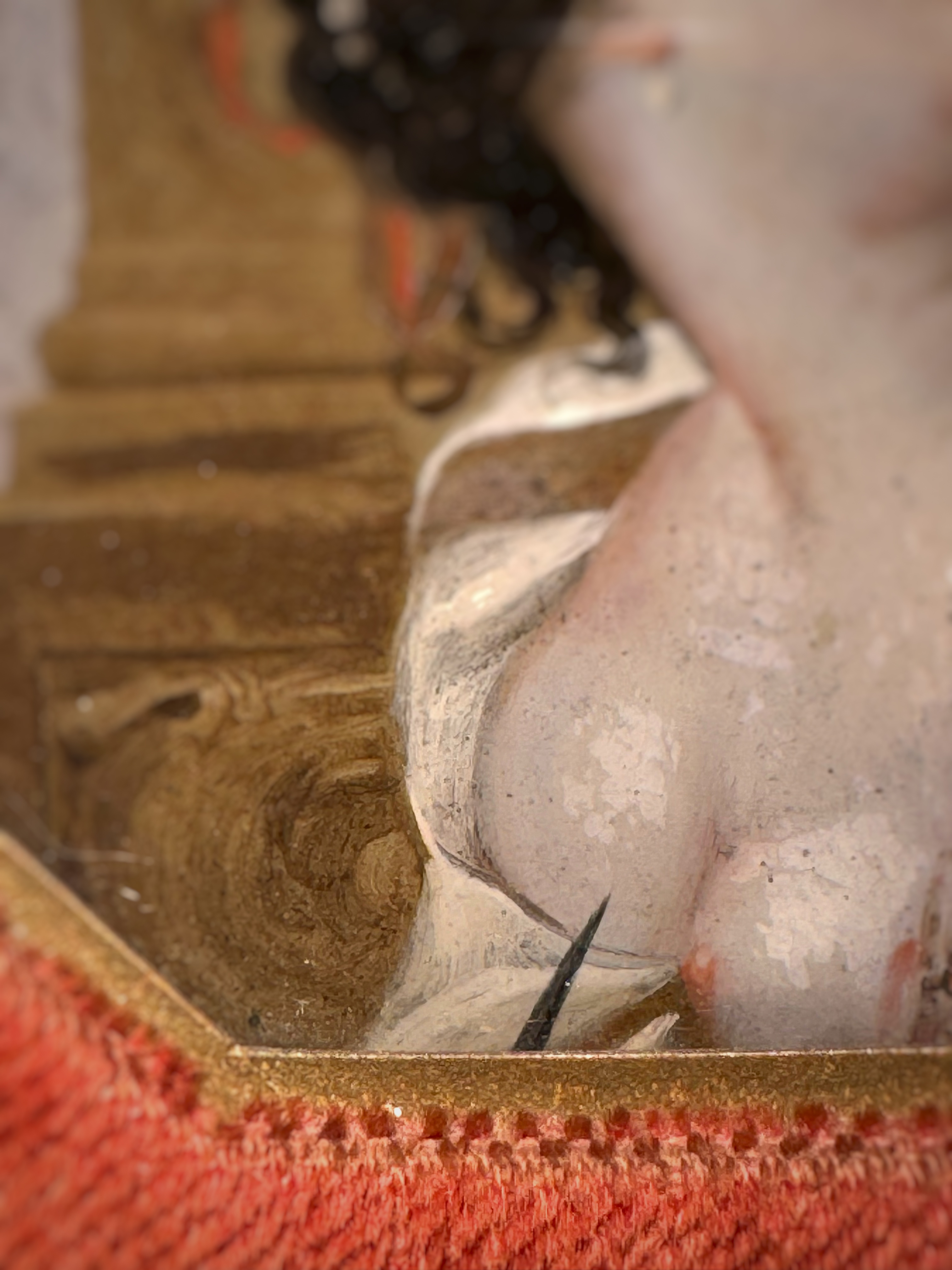
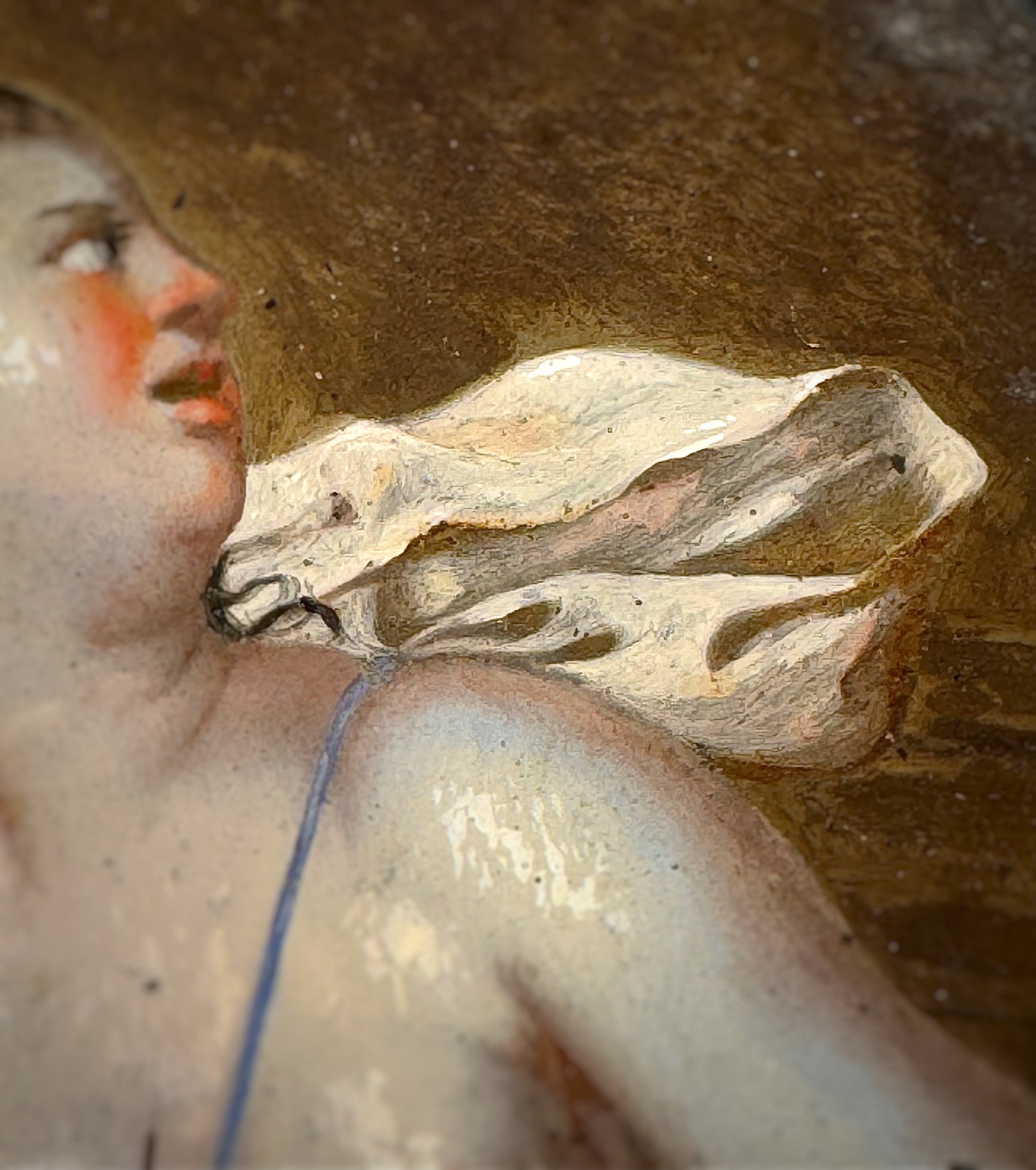
The terrified look cast over her shoulders, the disheveled hair and dress, the face violently colored by the torment, every detail convey huge drama to the scene: Lucretia has just inflicted the first stab to her chest, it is in fact possible to see the tip of the dagger in the lower part of the painting. Death is near, the woman has just enough time to look at her father and husband one last time before tragically ending her existence. It is incredible how such a small painting manages to express such pathos, also considering the technical difficulties that reverse glass painting entails.

Reverse painting on glass is an art form which consists in applying colors to a sheet of glass and then observing the image by turning it over and looking at it through the glass itself. One of the main challenges in creating a reverse painting on glass is the order in which the various layers of color are applied: the final result must therefore be well thought out and conceived in every single brush stroke.
We start with the most anterior layer that is usually dedicated to small details or particulars that need to be highlighted; in this case, for example, the bright pearls that illuminate Lucretia’s hair and face, as well as the small lighter areas on the skin of her body.

Then, layer after layer, the image is completed until the last application of color for the background. A veil of color to define the outline of the hair, another to define its volume, another to give the first shade to the disheveled locks, and so on until reaching the final touch, which gives the last gradation of color to the hair.
It is an extremely fascinating art form that has existed since the Middle Ages, when it was used to create sacred paintings with large areas of color characterized by clear and discontinuous interruptions. The art of icons, born and spread during the Byzantine Empire, is perhaps the most famous derivation.
Subsequently, painting under glass also spread to the rest of Europe where, in Italy and in particular in Venice, it influenced Renaissance art.
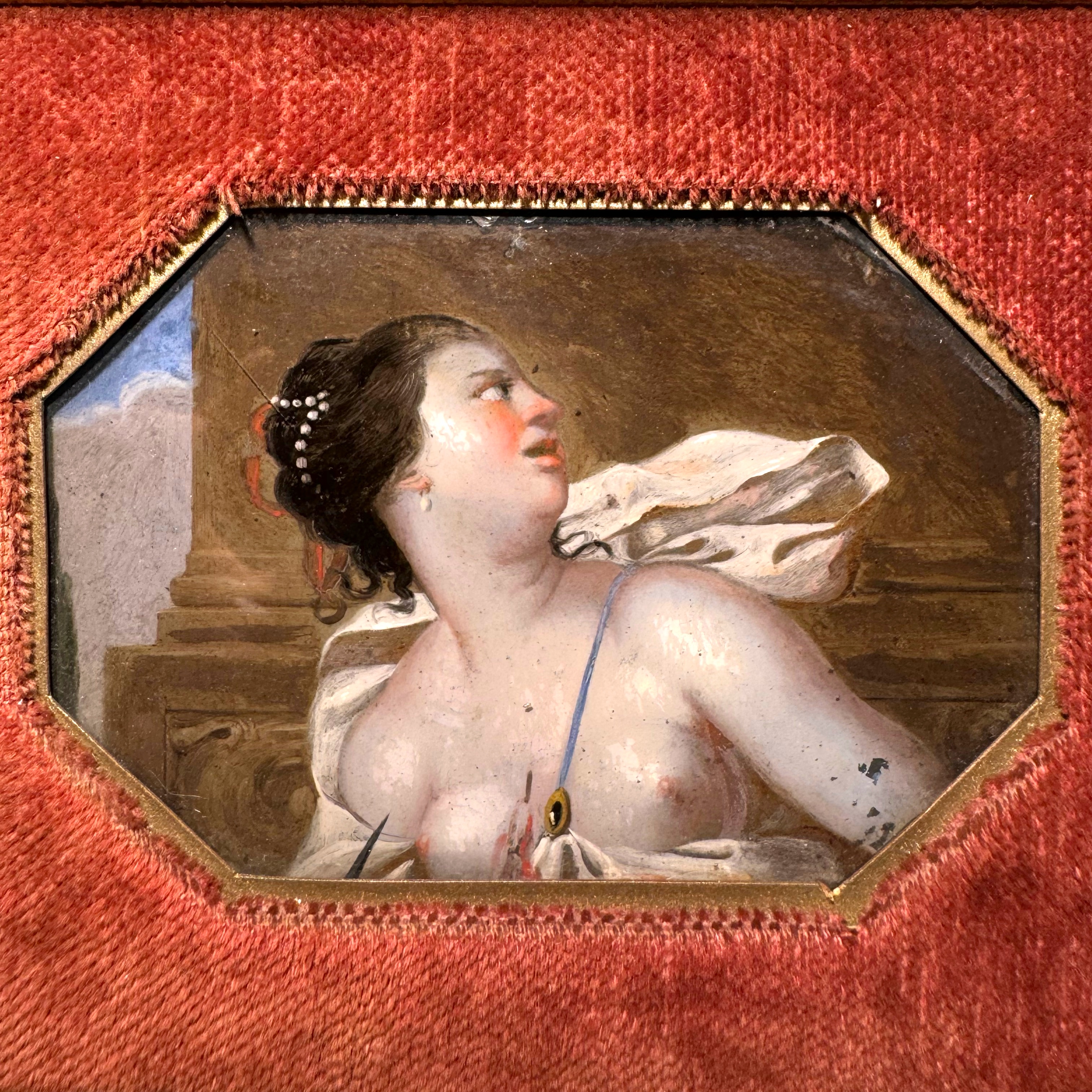
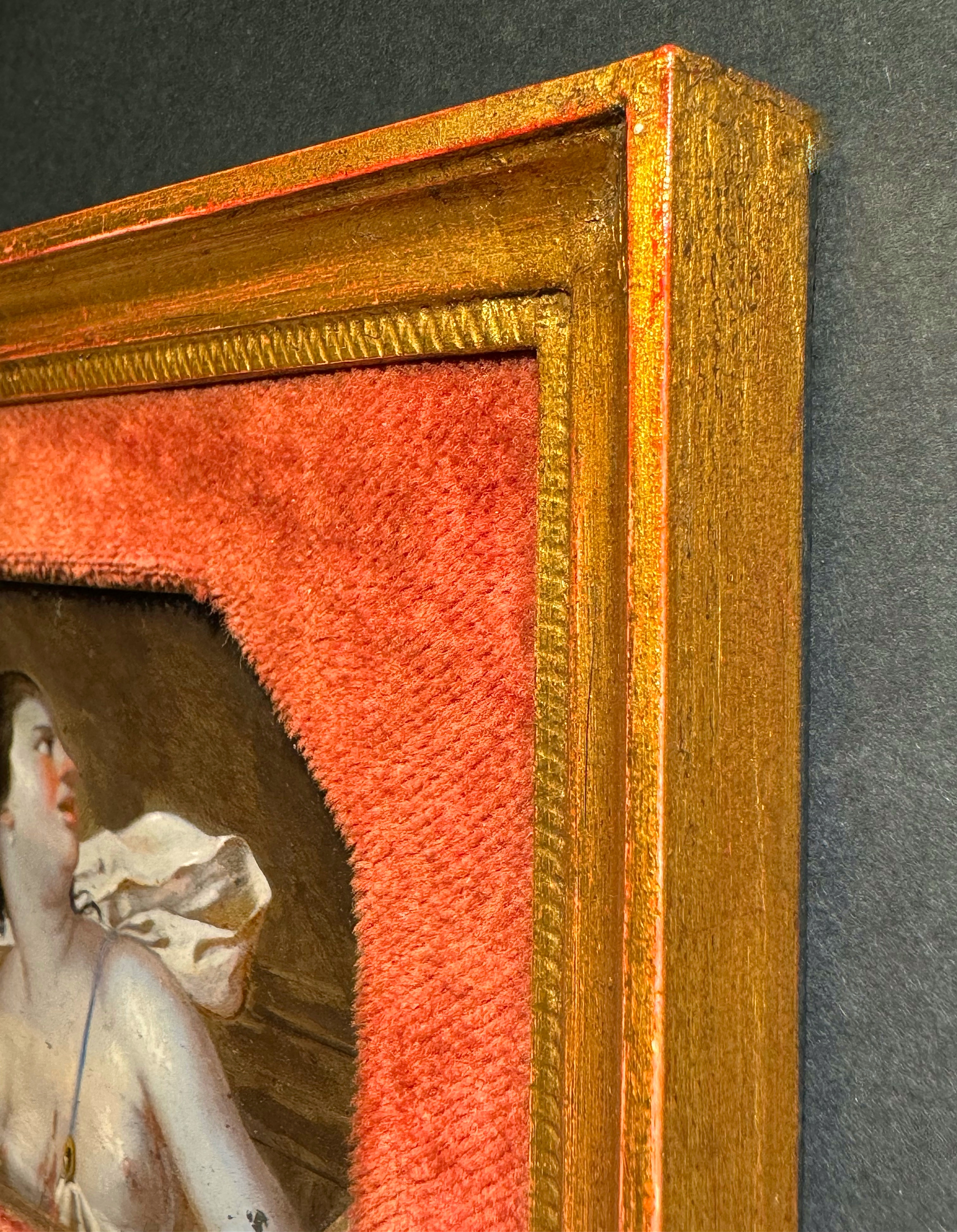
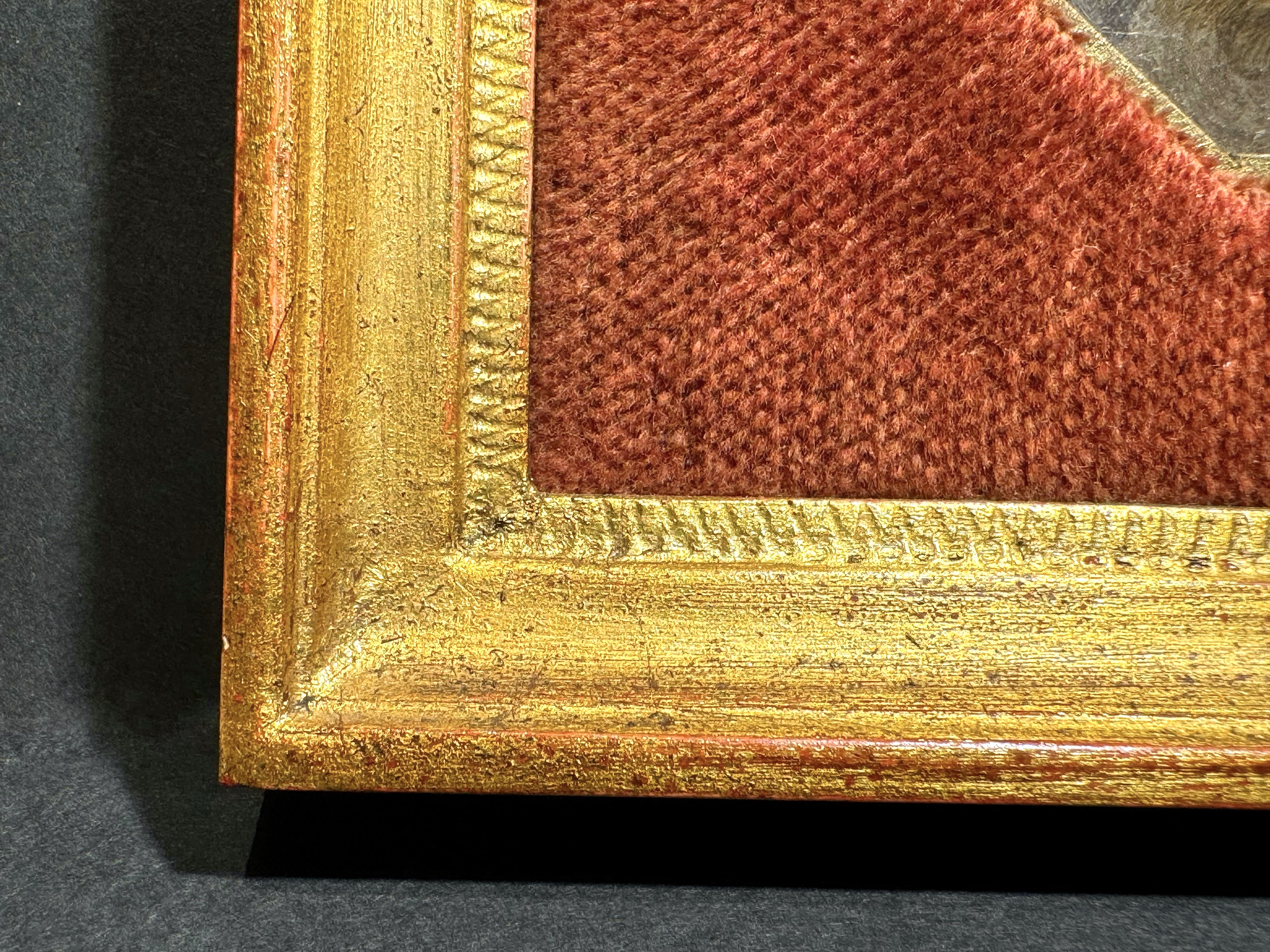
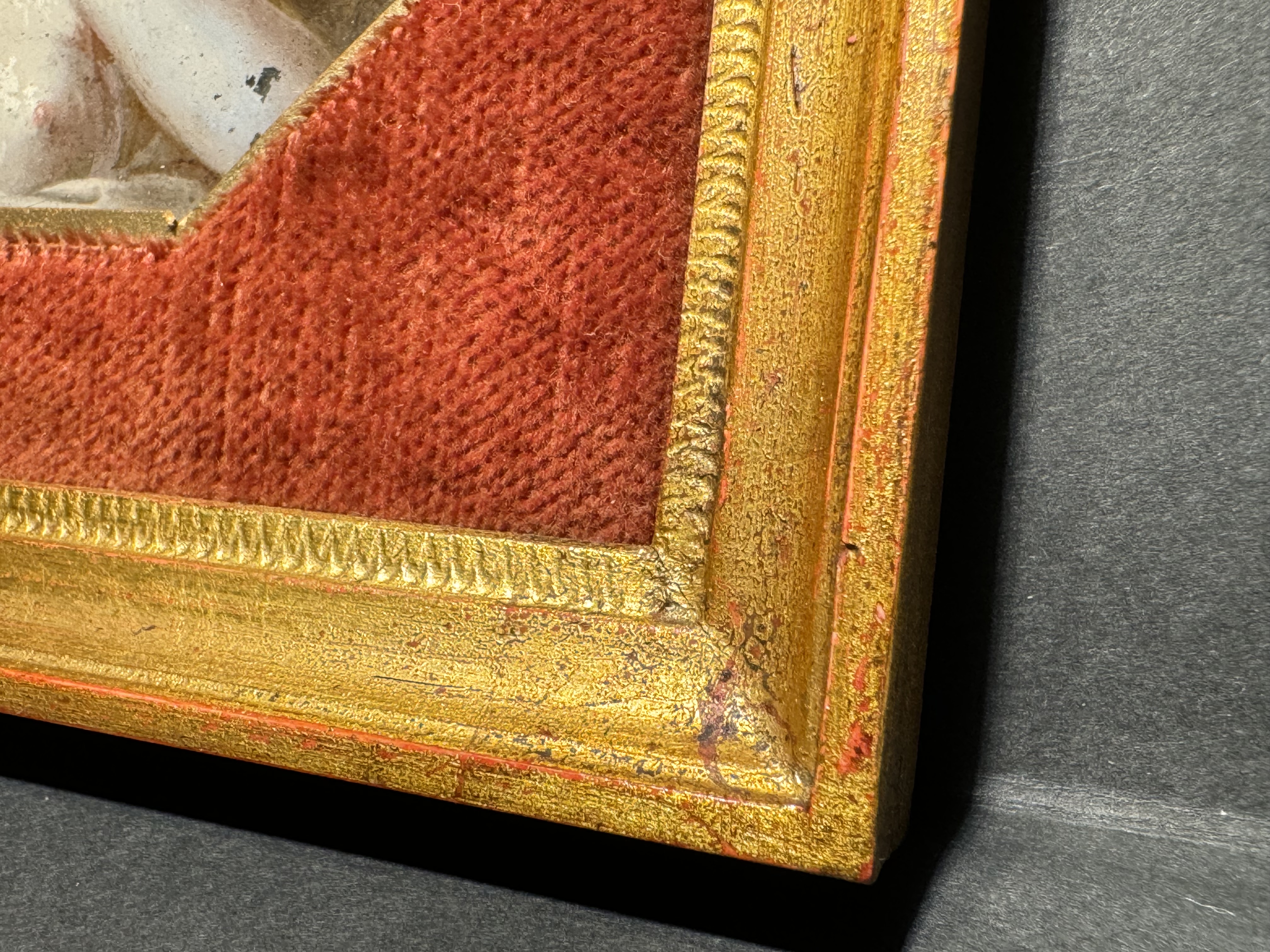
Late 18th – early 19th century
The reverse glass painting is protected by a gilded wooden frame from the 20th century with an octagonal passepartout in Pompeian-red velvet.
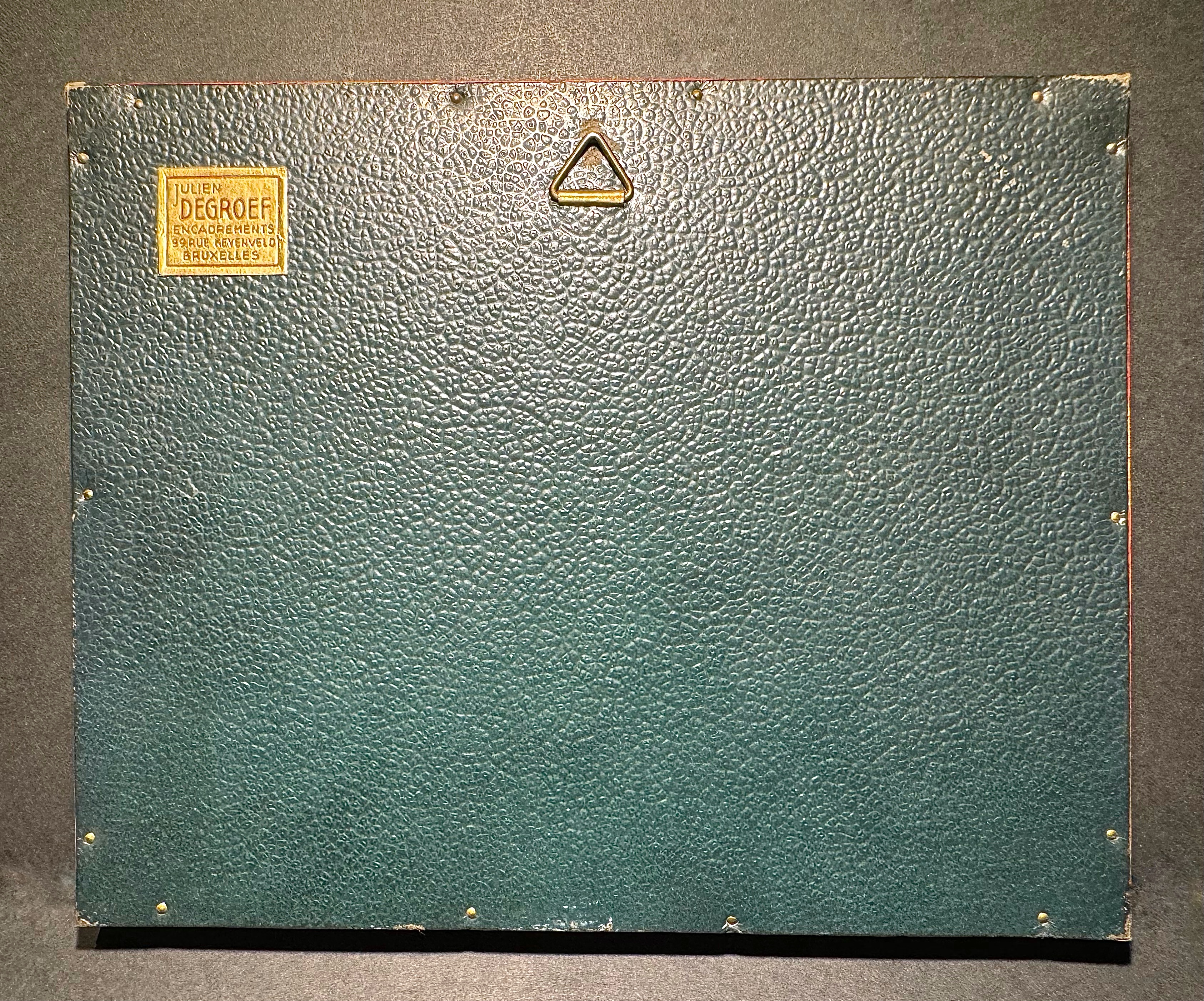
The back of the frame has a dark green lining imitating shagreen.
It bears the label of the old framer: Julien Degroef – Encadrements, 99 Rue Keyenveld, Bruxelles.
Frame size: approximately 16,5 x 13,5 cm
Painting size: approximately 10 cm x 7 cm
Price: SOLD
TERMS OF PURCHASE:
Items are sold as presented: we kindly invite our customers to carefully examine all the descriptions, images and videos relating to each object.
Please note that the colors might be slightly different from reality.
In addition to the information contained therein, Antichità al Ghetto shall provide, upon request, further pictures and details.
PAYMENT is to be carried out by bank transfer.
SHIPPING COSTS through DHL EXPRESS are at the purchaser’s expense (please, find out about our shipping rates here).
Don’t hesitate to contact us for further information.
You can reach us here: info@antichitaalghetto.com, we will answer you back as soon as possible!